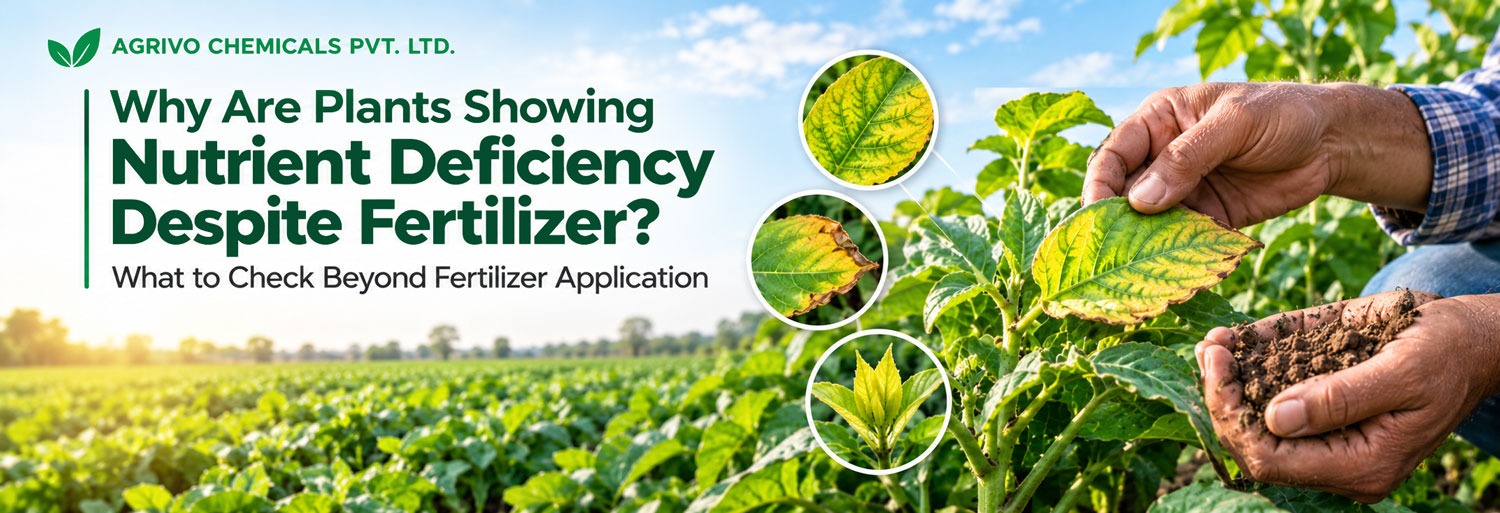
Why are plants showing nutrient deficiency symptoms despite fertilizer application? This is a common concern for farmers who continue to notice yellow leaves, stunted growth, poor flowering or weak root development after applying fertilizer. In many cases, the problem is not simply a lack of fertilizer. Soil pH, poor root health, water imbalance, nutrient interactions and incorrect application practices can prevent plants from absorbing the nutrients they need.
Understanding the causes of nutrient deficiency despite fertilizer application helps farmers identify the underlying problem, improve nutrient management and avoid unnecessary fertilizer use.
What Causes Nutrient Deficiency Despite Fertilizer Application?
Plants need essential nutrients such as nitrogen, phosphorus, potassium, calcium, magnesium, sulphur and micronutrients including iron, zinc and boron. Fertilizer supplies some or all of these nutrients, but plants must still absorb them through healthy roots or, where appropriate, through their leaves.
When nutrients are unavailable or cannot be absorbed efficiently, deficiency symptoms may continue even after fertilizer application.
1. Incorrect Soil pH
Soil pH plays a major role in determining nutrient availability. When soil is too acidic or too alkaline for a particular crop, certain nutrients may become less available for plant uptake.
For example, high soil pH can reduce the availability of micronutrients such as iron and zinc. In strongly acidic soils, other nutrient deficiencies or toxicities may occur.
What farmers can do: Test soil pH and follow crop-specific recommendations before applying soil amendments or additional fertilizers.
The Purdue University Extension guide to soil pH explains how soil acidity and alkalinity influence nutrient availability.
2. Poor Root Development
Healthy roots are essential for absorbing water and nutrients. Compacted soil, waterlogging, root damage and poorly aerated soil can restrict root growth and reduce nutrient uptake.
Even when fertilizer is present in the soil, damaged or poorly functioning roots may struggle to absorb it effectively.
What farmers can do: Inspect soil drainage, root condition and compaction. Improve drainage or soil structure where appropriate and follow crop-specific root management recommendations.
3. Overwatering or Underwatering
Water helps dissolve nutrients and transport them towards plant roots. Too little water can limit nutrient movement and absorption, while excessive irrigation can reduce oxygen availability around roots and contribute to nutrient losses.
Heavy rainfall can also wash mobile nutrients, such as nitrate nitrogen, below the root zone in some soils.
What farmers can do: Monitor soil moisture, adjust irrigation to crop requirements and consider drainage conditions before applying additional fertilizer.
4. Nutrient Imbalance or Nutrient Lockout
Applying more fertilizer does not always improve plant nutrition. Excessive amounts of one nutrient can interfere with the uptake or availability of another.
For example, excessive phosphorus can contribute to zinc deficiency under certain soil conditions. Nutrient interactions depend on soil properties, crop type and existing nutrient levels.
What farmers can do: Use soil test results to guide fertilizer selection and application rates rather than repeatedly applying the same fertilizer without identifying the deficiency.
5. Incorrect Fertilizer Type, Dosage or Timing
A fertilizer may not contain the nutrient that the crop actually lacks. Alternatively, the application rate, placement or timing may not match the crop’s needs.
For instance, a fertilizer supplying nitrogen will not necessarily correct an iron or zinc deficiency.
What farmers can do: Confirm which nutrient is deficient, select an appropriate fertilizer and follow recommended application rates and crop-stage guidance.
6. Nutrient Loss Through Leaching or Runoff
Some nutrients can be lost when excessive irrigation or heavy rainfall moves them away from the root zone. Surface runoff and soil erosion can also remove nutrients from agricultural land.
As a result, plants may continue showing deficiency symptoms even when fertilizer was applied earlier.
What farmers can do: Use suitable application timing, manage irrigation carefully and follow locally recommended nutrient placement and split-application practices.
7. Diseases, Pests or Other Environmental Stress
Yellowing leaves, poor growth and leaf discoloration are not always signs of nutrient deficiency. Root diseases, insect damage, herbicide injury, salinity and temperature stress can produce similar symptoms.
Adding more fertilizer without identifying the actual cause may waste resources or worsen the problem.
What farmers can do: Inspect the entire plant, including leaves, stems and roots. Check for pests, disease symptoms and environmental stress before deciding on corrective treatment.
How Can Farmers Identify Nutrient Deficiency in Crops?
Visual symptoms can help identify a possible deficiency, but they should not be treated as definitive proof. Different nutrient deficiencies can look similar, and symptoms vary by crop and growing conditions.
Common Nutrient Deficiency Symptoms
| Nutrient | Possible symptoms |
| Nitrogen | Yellowing that often begins on older leaves; reduced growth |
| Phosphorus | Stunted growth; sometimes dark green, reddish or purplish foliage |
| Potassium | Yellowing or scorching along leaf margins, often on older leaves |
| Iron | Interveinal yellowing, often first visible on young leaves |
| Zinc | Small leaves, shortened internodes and stunted growth in susceptible crops |
| Magnesium | Interveinal yellowing that often begins on older leaves |
These symptoms are indicative rather than conclusive. Confirmation through soil or plant tissue testing is recommended when the cause is uncertain.
How to Correct Nutrient Deficiency Despite Fertilizer Application
The most effective approach is to identify the cause before applying more fertilizer.
Step 1: Conduct a Soil Test
A soil test can help assess nutrient levels and soil pH. Follow proper sampling instructions and use a recognised agricultural soil testing laboratory.
Step 2: Inspect Plant Roots and Soil Conditions
Check for waterlogging, compaction, poor drainage and root damage. These factors can limit nutrient uptake even when nutrients are present.
Step 3: Confirm the Suspected Nutrient Deficiency
Compare symptoms with crop-specific guidance and consider plant tissue testing when recommended by an agricultural expert.
Step 4: Adjust the Nutrient Management Plan
Use test results to select suitable fertilizers, application rates and timing. Avoid excessive application or mixing products without checking compatibility and recommendations.
Step 5: Improve Soil Health
Balanced nutrient management, suitable organic matter practices, appropriate irrigation and good soil structure can support healthier roots and more efficient nutrient uptake.
Can Humic and Fulvic Acid Help With Nutrient Management?
Humic and fulvic acid products may be used as part of a broader soil and crop nutrition programme, depending on the product formulation, crop and application method.
These materials can support soil quality and nutrient availability in suitable conditions, but they do not replace essential nutrients or automatically correct every deficiency. Their suitability should be assessed alongside soil conditions and crop requirements.
AGRIVO CHEMICALS offers AGR HUMIVO 98%, a powder formulation containing humic and fulvic acid. It is intended to complement balanced crop nutrition and soil management practices.
Always follow the product label for recommended dosage, timing and application method.
Frequently Asked Questions
1. Why are my plants turning yellow even after applying fertilizer?
Yellowing can result from nitrogen or other nutrient deficiencies, unsuitable soil pH, damaged roots, water imbalance, pests or diseases. Soil and plant tissue testing can help establish the cause.
2. Can excess fertilizer cause nutrient deficiency symptoms?
Yes. Excessive fertilizer can increase soil salinity or create nutrient imbalances that interfere with the availability or uptake of other nutrients. Apply fertilizers according to soil test results and crop recommendations.
3. How does soil pH affect nutrient absorption?
Soil pH affects the chemical forms and availability of nutrients. If the pH is unsuitable for a crop, some nutrients may become less available even when they are present in the soil.
4. Should I apply more fertilizer if deficiency symptoms continue?
Not without identifying the cause. Additional fertilizer may not solve problems caused by poor drainage, root damage, unsuitable soil pH or pests and diseases. Test the soil and seek qualified advice before changing the nutrient programme.
5. How can farmers improve nutrient uptake in crops?
Farmers can improve nutrient management by maintaining suitable soil conditions, managing irrigation, protecting root health, using soil test results and applying balanced fertilizers at the appropriate time.
Conclusion
Nutrient deficiency despite fertilizer application can occur because nutrients are unavailable, roots cannot absorb them efficiently or another problem is producing similar symptoms. Applying more fertilizer without diagnosing the cause may increase costs without resolving the issue.
Soil testing, root inspection, balanced fertilization and proper water management can help farmers make informed decisions and support healthier crop development.
Improve Your Crop Nutrition Strategy With AGRIVO CHEMICALS
Looking for solutions to support soil health and balanced crop nutrition? Explore AGR HUMIVO 98%, AGRIVO CHEMICALS’ humic and fulvic acid formulation, and learn how it may fit into an appropriate crop nutrition programme.
AGRIVO CHEMICALS PRIVATE LIMITED
- Phone: +91 97635 55529
- Email: info@agrivochemicals.com
- Website: https://agrivochemicals.com/
- Address: Uttam Warehousing, 9/1, near Poonam Petrol Pump, Mangdewadi, Katraj, Pune, Maharashtra 411046.
Contact AGRIVO CHEMICALS for product information and enquiries. Select and apply agricultural products according to their labels, crop requirements and appropriate agricultural guidance.