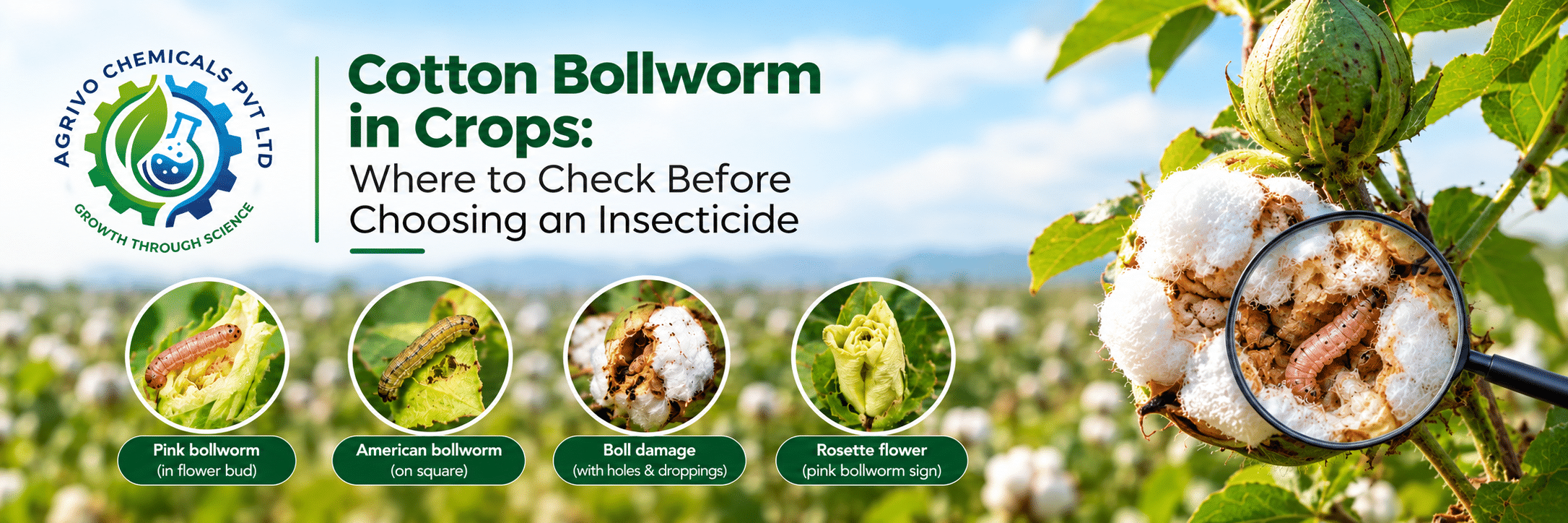
Cotton bollworm can damage flower buds, flowers and developing bolls while remaining difficult to detect. Pink bollworm larvae often enter cotton bolls and feed on seeds from inside, whereas American bollworm larvae may feed on squares, flowers and bolls more visibly. Before choosing an insecticide for cotton bollworm control, farmers should identify the bollworm type, inspect reproductive parts and confirm whether live larvae are still present.
Spraying without proper field scouting may increase costs without controlling larvae already protected inside cotton bolls.
Which Bollworms Commonly Damage Cotton?
Cotton can be affected by multiple bollworm species, including:
- Pink bollworm
- American bollworm or cotton bollworm
- Spotted bollworm
- Spiny bollworm
These pests differ in their appearance, feeding behaviour and hiding places. Correct identification is essential because the most effective monitoring and management approach may not be the same for every species.
Where to Check for Cotton Bollworm Infestation
1. Inspect Cotton Squares and Flower Buds
Begin by examining squares, particularly those that are drying, damaged or falling prematurely. American and spotted bollworm larvae may feed on tender squares before moving to flowers and bolls.
Check for:
- Small feeding holes
- Damaged bracts
- Insect droppings near the feeding area
- Partially eaten internal tissue
- Live larvae near the square
Collect fallen squares from beneath plants and open a sample to determine whether bollworm feeding caused the shedding.
2. Check Flowers for Rosette Formation
A rosette flower is an important warning sign of pink bollworm in cotton. The larva ties flower petals together with silk, preventing the flower from opening normally.
Inspect flowers that look twisted, closed or unusually shaped. Carefully open them and look for a small larva inside. Rosette flowers indicate that pink bollworm activity has begun and that closer boll monitoring is necessary.
3. Open Green Bolls to Find Hidden Larvae
Pink bollworm larvae usually enter young bolls and feed internally on developing seeds. External symptoms may be difficult to recognise because the entry point can close as the boll grows.
Select green bolls from different areas of the field and cut them open carefully. Look for:
- Damaged or hollow seeds
- Webbed lint
- Stained internal tissue
- Small pinkish larvae
- Feeding tunnels between boll sections
- Prematurely opening or rotting bolls
ICAR-CICR recommends pheromone monitoring along with destructive sampling of green bolls to detect pink bollworm incidence and assess whether action is required.
4. Examine Bolls for Holes and Droppings
American bollworm larvae may create noticeable holes while feeding on bolls. Fresh droppings around an opening can indicate an active larva.
However, the absence of visible droppings does not rule out pink bollworm because it often remains concealed inside the boll. Open affected bolls rather than relying only on external symptoms.
5. Look Inside Prematurely Opened Bolls
Bolls damaged by pink bollworm may open early, produce poor-quality lint or develop secondary rotting. Examine prematurely opened bolls for damaged seeds, webbed lint and larvae.
Boll opening can also be affected by diseases, nutrient problems and weather stress. Internal examination helps distinguish bollworm damage from other causes.
6. Check Fallen Flowers and Bolls
Do not inspect only the plant canopy. Fallen squares, flowers and young bolls can provide early evidence of bollworm activity.
Collect samples from multiple locations instead of checking only one field edge. Open them carefully and record the percentage showing live larvae or fresh feeding damage.
7. Monitor Field Borders and Late-Planted Areas
Bollworm incidence may not be uniform across the field. Pay additional attention to:
- Field borders
- Dense crop patches
- Late-sown cotton
- Areas near old cotton fields
- Fields with extended flowering and boll formation
- Locations with previous bollworm problems
Walk through the field in a zigzag pattern and inspect representative plants from several locations.
Cotton Bollworm Symptoms Farmers Should Recognise
Key Signs of Pink and American Bollworm Damage
Common cotton bollworm symptoms include:
- Drying or fallen squares
- Rosette flowers
- Holes in flower buds or bolls
- Droppings near feeding holes
- Larvae inside flowers or green bolls
- Damaged seeds and webbed lint
- Premature boll opening
- Stained or poor-quality lint
- Boll rot following internal damage
Rosette flowers and internally damaged seeds strongly suggest pink bollworm, while larger holes with visible droppings may indicate American bollworm or another external-feeding borer.
What to Check Before Choosing an Insecticide
Confirm the Cotton Bollworm and Infestation Stage
Before selecting an insecticide for cotton bollworm, determine:
- Which bollworm species is present
- Whether eggs, young larvae or mature larvae dominate
- Whether larvae are exposed or already inside bolls
- How many plants and bolls are affected
- Whether fresh damage is increasing
- Whether pheromone trap catches are rising
- Whether the recommended economic threshold has been reached
- Which insecticide modes of action were used previously
Young, exposed larvae are generally easier to reach than larvae feeding inside bolls. Once pink bollworm enters a boll, a surface spray may provide limited control.
Use only an insecticide registered for cotton and the identified bollworm. Follow the approved dose, application interval, maximum number of sprays, pre-harvest interval and safety directions.
Integrated Cotton Bollworm Management
Insecticide application should be one part of an Integrated Pest Management programme. Recommended practices may include:
- Timely sowing and crop termination
- Regular inspection of flowers and green bolls
- Pheromone traps for monitoring or recommended mass trapping
- Removal of rosette flowers where practical
- Destruction of infested crop residue
- Avoiding an unnecessarily extended cotton season
- Rotation of approved insecticide modes of action
- Protection of natural enemies
- Coordinated community-level management
Government guidance recommends monitoring, economic-threshold-based decisions and integrated methods instead of routine pesticide use.
Frequently Asked Questions
Where does pink bollworm hide in cotton?
Pink bollworm larvae may hide inside rosette flowers and developing green bolls, where they feed on seeds and lint.
How can farmers detect pink bollworm early?
Use pheromone traps, inspect flowers for rosette formation and regularly open a representative sample of green bolls.
Are holes in cotton bolls always caused by pink bollworm?
No. American, spotted and spiny bollworms may also damage bolls. Diseases and physical injuries can create similar symptoms.
Why may an insecticide fail against cotton bollworm?
Possible causes include incorrect pest identification, late spraying, larvae already inside bolls, poor coverage, unsuitable timing or insecticide resistance.
Can the same insecticide be applied repeatedly?
Repeated use of the same mode of action can increase resistance risk. Rotate suitable registered modes of action according to expert and label guidance.
Detect Cotton Bollworm Before It Reaches the Boll
Effective cotton bollworm control begins with early scouting, accurate identification and timely action. Checking squares, rosette flowers and green bolls helps farmers understand where the pest is feeding and select an appropriate management strategy.
Use AGRIVOGEN for Cotton Bollworm Management
After confirming active cotton bollworm infestation and reaching the recommended economic threshold, farmers may use AGRIVOGEN as part of an Integrated Pest Management programme—provided its approved label specifically lists cotton and the identified bollworm.
Apply AGRIVOGEN when larvae are young and exposed, before they enter flowers or bolls. Once pink bollworm larvae are protected inside green bolls, spray effectiveness may be limited.
For responsible application:
- Follow the label-approved dosage and water volume.
- Ensure thorough coverage of squares, flowers and developing bolls.
- Observe the recommended application interval and pre-harvest period.
- Do not exceed the permitted number of applications.
- Rotate with approved insecticides from different modes of action.
- Wear the recommended personal protective equipment.
For AGRIVOGEN dosage, availability and cotton bollworm application guidance, contact Agrivo Chemicals Private Limited.
📞 Call: +91 97635 55529
📧 Email: info@agrivochemicals.com🌐 Visit: www.agrivochemicals.com
Always read the AGRIVOGEN product label before use. Apply only if cotton and the identified bollworm are included in its registered uses.