
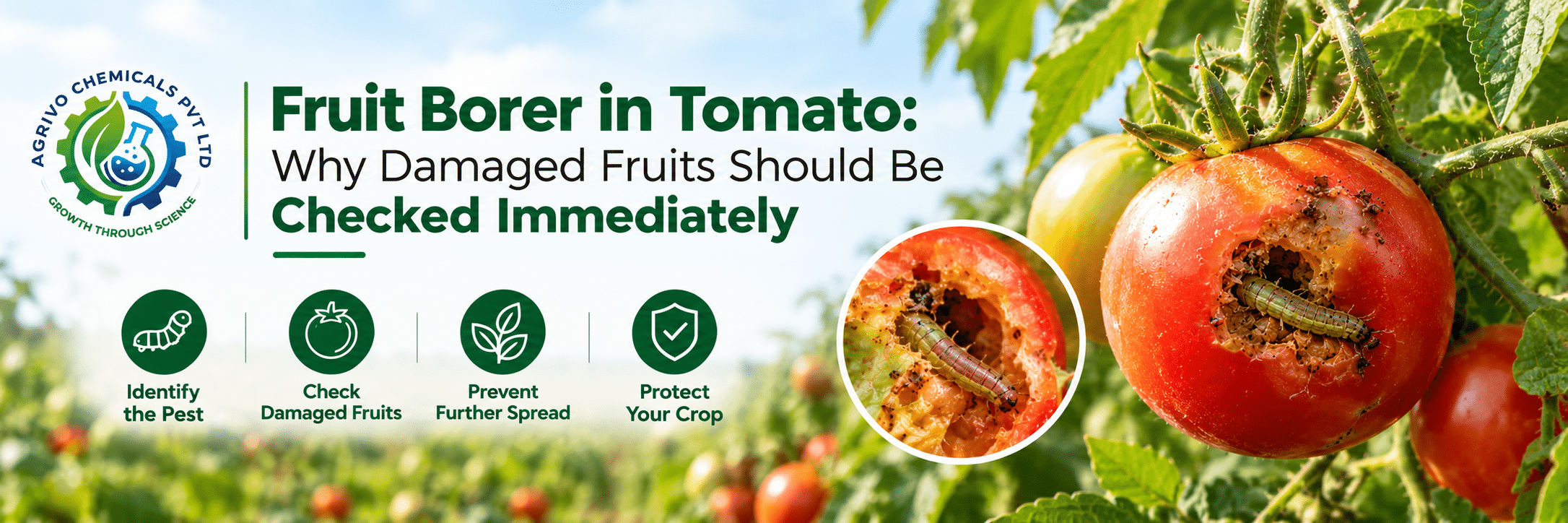
Fruit borer in tomato can turn healthy-looking fruits into unmarketable produce within a short period. The caterpillar generally feeds on flower buds and developing fruits, creating holes and damaging the internal pulp. Once the larva enters a tomato, it becomes harder to reach with a surface spray and may continue moving between fruits.
Farmers should therefore inspect damaged tomatoes immediately, confirm whether an active larva is present and assess how widely the infestation has spread. Early identification supports better tomato fruit borer control and prevents unnecessary or poorly timed insecticide applications.
What Is Fruit Borer in Tomato?
Tomato fruit borer is commonly associated with Helicoverpa armigera, a destructive caterpillar pest that attacks tomato and several other crops. The adult moth lays eggs on tender plant parts, flowers or young fruits. After hatching, the larvae initially feed on exposed plant tissue before boring into developing tomatoes.
A larva may insert part of its body into a fruit while the remaining portion stays visible outside. As it feeds, the tomato becomes damaged, contaminated and vulnerable to rotting.
Not every hole in a tomato is caused by Helicoverpa. Tomato pinworm, other caterpillars, birds, mechanical injury and fruit diseases can produce confusing symptoms. The pest should be identified before a control product is selected.
What Are the Symptoms of Fruit Borer in Tomato?
Visible Signs of Tomato Fruit Borer Damage
Farmers should inspect tomato plants for the following symptoms:
- Circular or irregular holes in developing fruits
- Caterpillars partially visible inside tomatoes
- Fresh insect droppings near entry holes
- Damaged flowers or flower buds
- Feeding on tender leaves and shoots
- Internal pulp damage
- Premature fruit drop
- Rotting around the feeding hole
- Uneven ripening or distorted fruits
- Multiple damaged tomatoes on the same plant
Young larvae may initially feed on leaves, flowers or the fruit surface. Older larvae usually cause more serious damage after entering the fruit.
Why Should Damaged Tomato Fruits Be Checked Immediately?
1. The Larva May Still Be Inside the Fruit
A damaged tomato should be opened carefully to check for an active caterpillar. The larva may remain inside the fruit or move to another tomato after feeding.
If only the external hole is observed, farmers may underestimate the pest population or confuse old damage with an active infestation.
2. One Caterpillar Can Damage Multiple Fruits
A fruit borer does not necessarily remain in one tomato throughout its feeding stage. It may leave a damaged fruit and attack another, creating losses greater than the visible number of larvae.
Finding one affected tomato should trigger inspection of nearby flowers, fruits and plants.
3. Internal Larvae Are Difficult to Reach
Application timing is critical in fruit borer management. Young larvae feeding on exposed plant parts are generally easier to target. Once a caterpillar is protected inside a tomato, spray coverage on the fruit surface may not provide the expected control.
This is why waiting for numerous damaged fruits before acting can reduce treatment effectiveness.
4. Feeding Holes Encourage Secondary Rot
Fruit borer feeding damages the tomato skin and exposes internal tissue. These wounds can allow secondary microorganisms to enter, causing softening and decay.
The fruit may therefore become unmarketable even when the feeding hole initially appears small. ICAR notes that wounds created by tomato caterpillar pests can also facilitate secondary pathogen invasion.
5. Damaged Fruits Can Hide the Real Infestation Level
A few obvious fruits may represent only part of the problem. Eggs, young larvae and less-visible feeding damage may be present elsewhere in the crop.
Checking fruits immediately helps farmers answer important questions:
- Is the damage fresh or old?
- Are live larvae present?
- Are they small or fully grown?
- How many plants are affected?
- Is damage concentrated in one area?
- Are flowers and young fruits also being attacked?
How to Check Tomato Crops for Fruit Borer
Follow a Field-Wide Scouting Method
Do not inspect only the plants near the entrance or field border. Walk through the field in a zigzag pattern and examine representative plants from several locations.
Check:
- Upper and lower leaf surfaces for eggs
- Tender shoots and flower clusters
- Flowers and young fruits
- The area beneath the fruit calyx
- Fruits showing holes or droppings
- Fallen and rotting tomatoes
- Nearby weeds or alternative host plants
Open a sample of damaged fruits and record whether live larvae are present. Also note the crop stage, number of affected fruits and whether fresh damage is increasing.
Distinguish Fruit Borer From Other Tomato Problems
Fruit borer damage may be confused with:
- Tomato pinworm: May mine leaves and bore into stems or fruits.
- Fruit rot: Often produces expanding soft, sunken or discoloured patches without caterpillar feeding.
- Cracking: Usually develops as splits caused by irregular moisture or rapid fruit growth.
- Bird damage: Often produces pecking marks without droppings or larvae.
- Physiological disorders: May cause tissue damage but do not contain caterpillars.
Correct identification prevents farmers from applying an insecticide to a disease or non-insect problem.
When Does Tomato Fruit Borer Become Serious?
Fruit borer risk can increase when tomato crops enter flowering and fruiting stages. The availability of flowers and developing fruits provides feeding sites for larvae.
Infestation may become more damaging when:
- Field scouting is irregular
- Damaged fruits remain on plants
- Tomato is continuously cultivated nearby
- Alternative host crops or weeds support the pest
- The crop canopy is dense
- The same insecticide group is repeatedly used
- Applications begin only after larvae enter fruits
- Pest pressure is not monitored across the field
Weather, location, planting time and surrounding crops can also affect pest activity.
How to Manage Fruit Borer in Tomato
Use Integrated Pest Management for Tomato Fruit Borer Control
Effective tomato fruit borer control should combine monitoring, cultural practices, biological protection and need-based insecticide use. Integrated Pest Management aims to keep pest populations below damaging levels while reducing unnecessary pesticide use.
1. Remove and Destroy Infested Fruits
Collect fruits containing larvae or showing fresh borer damage. Dispose of them responsibly away from the production area so larvae cannot continue developing.
Do not leave infested tomatoes between crop rows.
2. Monitor Adult Moth Activity
Crop-specific pheromone traps can help monitor male moth activity and indicate changes in pest pressure. Trap catches should support field scouting rather than replace direct inspection of plants and fruits.
Use the recommended lure, trap density and replacement schedule for the target pest.
3. Inspect the Crop Frequently
Begin monitoring before severe fruit damage appears. Examine flowers and young fruits regularly, particularly during flowering and early fruit development.
Early detection improves the opportunity to manage eggs and young, exposed larvae.
4. Use Trap Crops Where Locally Recommended
Agricultural guidance includes marigold as a trap-crop component in tomato fruit borer IPM programmes when its flowering is properly synchronised with the tomato crop. TNAU Agritech
Trap crops require monitoring and management. Simply planting marigold without inspecting it may not provide adequate protection.
5. Protect Natural Enemies
Beneficial insects and parasitoids can help suppress eggs and young larvae. Avoid unnecessary broad-spectrum sprays, particularly when pest populations remain below the locally recommended action threshold.
6. Maintain Field Sanitation
Remove severely infested fruits, crop residue and relevant alternative hosts. After the final harvest, manage tomato residue properly to reduce the survival of pests between crop cycles.
7. Apply Insecticides at the Correct Stage
Where monitoring confirms that chemical intervention is necessary, select only an insecticide approved for tomato and the identified fruit borer.
Application is generally more useful when larvae are young and exposed. Follow the registered product label for:
- Crop and target pest
- Recommended dose
- Water volume
- Application timing
- Maximum number of applications
- Pre-harvest interval
- Re-entry period
- Personal protective equipment
Never increase the dose because damaged fruits are already visible. Remove infested produce and assess the active pest population before spraying.
Why Repeated Insecticide Spraying May Fail
Common Fruit Borer Management Mistakes
Poor control may result from:
- Spraying after larvae enter fruits
- Incorrect pest identification
- Inadequate canopy and fruit coverage
- Using an unapproved product
- Applying an incorrect dose
- Rain soon after application
- Poor sprayer calibration
- Repeated use of the same mode of action
- Failure to remove infested fruits
- Ignoring field monitoring and action thresholds
Changing brand names does not necessarily change the insecticide’s mode of action. Farmers should use suitable rotation strategies based on approved products and qualified guidance.
AGRIVO EMA CORA for Caterpillar and Borer Management
A Targeted Agrivo Solution for Tomato Fruit Borer Enquiries
After confirming fruit borer infestation in tomato, farmers can enquire about AGRIVO EMA CORA, Agrivo Chemicals’ dual-action insecticide containing:
- Emamectin Benzoate 4%
- Chlorantraniliprole 12% SC
Agrivo Chemicals lists tomato among the recommended crops and fruit borers among the target pests for AGRIVO EMA CORA. The formulation is designed for caterpillar and borer management.
Use AGRIVO EMA CORA only when its registered product label specifically permits the intended tomato–fruit-borer application in your location. Apply at the label-recommended crop stage, dosage, water volume and interval. The product should be integrated with monitoring, removal of damaged fruits and resistance-management practices.
Do not apply the product based only on visible fruit holes. Confirm active caterpillar infestation and obtain crop-specific guidance first.
Frequently Asked Questions
What causes holes in tomato fruits?
Holes may be caused by fruit borers, tomato pinworms, other caterpillars, birds or physical injury. Look for larvae, fresh droppings and internal feeding damage to identify the cause.
How do I identify fruit borer in tomato?
Inspect flowers and fruits for eggs, caterpillars, entry holes and droppings. Open damaged tomatoes carefully to check for larvae and internal pulp damage.
Can a damaged tomato be saved?
A fruit containing a caterpillar, internal feeding damage or rot is generally not marketable. Remove it promptly to prevent the larva from moving to another fruit.
What is the best time to manage tomato fruit borer?
The best opportunity is generally when eggs or young larvae are detected before the caterpillars enter fruits. Follow local action thresholds and approved product guidance.
Should every fruit hole be sprayed immediately?
No. First determine whether the damage is fresh, whether live larvae are present and whether the pest population justifies treatment.
Can the same insecticide be applied repeatedly?
Repeated use of the same mode of action can increase resistance risk. Follow label limits and rotate suitable approved modes of action under qualified guidance.
Can AGRIVO EMA CORA be used for tomato fruit borer?
Agrivo Chemicals lists tomato and fruit borers on the AGRIVO EMA CORA product page. Farmers must still confirm the registered label, recommended application, dosage and local approval before use.
Protect Tomato Fruits Through Early Detection
Fruit borer damage should never be judged from one visible hole alone. Open affected tomatoes, look for active larvae, inspect nearby plants and determine how far the infestation has spread. Early scouting, field sanitation and timely, label-led management can help protect fruit quality and reduce avoidable losses.
Need a suitable crop-protection solution for fruit borer in tomato? Contact Agrivo Chemicals Private Limited for AGRIVO EMA CORA product information, availability, dealer enquiries and responsible application guidance.
📞 Call: +91 97635 55529
📧 Email: info@agrivochemicals.com
🌐 Visit: www.agrivochemicals.com
Always read and follow the registered product label. Use only products approved for tomato and the identified pest, observe the required pre-harvest interval and consult a qualified agricultural professional when uncertain.